Foundation analysis and repair design
Permanent structural crack bonding
Bowing wall stabilization systems
Written coverage on all repair work
Not every crack you find in your foundation wall signals a structural problem, but every crack deserves a professional evaluation because the consequences of misclassifying a structural crack as cosmetic are serious. Our assessment process includes measuring crack width at multiple points, documenting the orientation precisely, checking for horizontal displacement at the crack face, and reviewing the soil and drainage conditions outside the wall. The result is a categorization of the crack as cosmetic, water-entry, or structural -- each with a different repair recommendation.
Horizontal foundation cracks are the category that demands the most urgent attention. A horizontal crack in a concrete block or poured wall indicates that the wall is being pushed inward by lateral earth pressure -- the weight of saturated soil and the force of frost heave pressing against the foundation from outside. Unlike vertical shrinkage cracks, horizontal cracks indicate that the wall is actively deflecting and will continue to do so unless the lateral force is counteracted. Walls that deflect more than one inch from plumb are approaching the threshold at which conventional repair methods may no longer be adequate and more extensive structural remediation may be required. Carbon fiber reinforcement applied to a horizontally cracked wall at the right stage of deflection stops further movement and allows the wall to carry its design loads without progressing to failure.
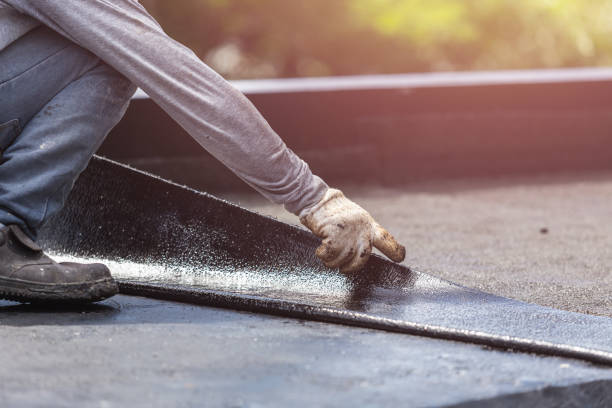
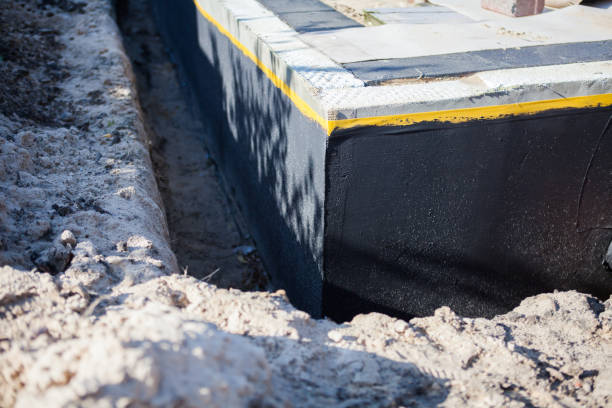
Epoxy injection and polyurethane injection are the two primary methods for sealing and structurally repairing cracks in poured concrete walls. Epoxy injection produces a bond that is actually stronger than the surrounding concrete, making it the correct choice for cracks where structural re-bonding of the two faces is the goal. The process involves drilling a series of small ports along the crack at intervals calculated to ensure complete penetration, installing surface-mounted injection ports, sealing the visible crack face between ports with epoxy paste, and pumping two-component structural epoxy resin under low pressure until it fully fills the void and appears at adjacent ports. The resin cures within the crack to a solid, high-strength bond that is permanent and fully water-resistant.
Bowing walls in block construction represent a specific category of damage where the masonry units have displaced outward of plumb due to lateral soil pressure. Depending on the degree of bowing, repair options range from carbon fiber strap reinforcement that stops further movement to wall anchor systems that attach to stable soil beyond the active failure zone and provide a mechanical load path that reduces the net lateral pressure on the wall. Our structural assessment determines which approach is appropriate based on the measured deflection, the soil conditions, and the construction history of the wall.
Six targeted repair services covering every foundation crack condition in Killbuck, OH homes.
Structural epoxy injection bonds the two faces of a poured concrete crack together with a cured material that exceeds the tensile strength of the surrounding concrete, producing a truly permanent structural repair.
We specify the appropriate polyurethane viscosity for each crack condition, using slower-reacting formulations for complete penetration into deep, narrow cracks and faster-reacting types for active water flow.
Carbon fiber straps bonded to the interior face of a bowing or horizontally cracked wall provide a permanent tensile reinforcement layer that counteracts lateral earth pressure and stops further wall deflection in its current position.
Wall anchors can be tightened over time as the soil condition allows, potentially restoring some of the original wall plumb position without excavation or more invasive structural work.
We repair stair-step cracks by tuck-pointing the affected mortar joints with a compatible mortar mix matched to the existing wall, reinforcing corner crack locations, and applying a crystalline waterproofer to the repaired area to prevent water intrusion at the newly bonded joints.
We seal the floor-wall joint with a combination of hydraulic cement at active leak points and a flexible polyurethane sealant bead over the sealed joint to accommodate minor movement without allowing the seal to crack again.
Crack mapping, moisture readings, and wall plumb measurements are documented in a written report that accompanies your quote.
We match the repair method to the specific crack condition -- epoxy for structural re-bonding, polyurethane for active water and flexible seal requirements, carbon fiber for bowing walls.
Our certified crew executes the repair to specification, maintaining injection pressure logs and documenting material volumes consumed to verify complete crack penetration.
Your warranty packet includes installation photos, crack condition documentation, and recommended monitoring intervals for any cracks assessed as stable but worth tracking.
The carbon fiber repair on our bowing wall was completed in one day and was far less invasive than we expected. No excavation, no major interior disruption. The crew was professional and explained every step of the process.
The written quote was detailed and transparent. They explained what type of crack I had, why they were recommending epoxy over polyurethane, and what the warranty covered. That level of professionalism made the decision easy.
Our basement had a floor-wall joint that was allowing water in during every heavy rain. JCB Waterproofing and Construction sealed it properly with hydraulic cement and a polyurethane bead. No water in two rainy seasons since. Clean, professional work.
Our certified specialists have seen every type of foundation crack in OH -- we know exactly what it takes to fix yours properly.
Call +1-866-476-1348 Now